Showing posts with label Science. Show all posts

How to Build a Fire

Mar 25, 2012 1 comments

How to Build a Fire is a depressing story by Jack London.  I'm not going to talk about that.  And I'm not going to talk about how to build a campfire either.  I'm going to talk about my firefighter refresher training that I took last Friday.

But... umm, wait a second.  Didn't I just take four days of fire training?  Oh yes, I did.  But boss W said I had to take it, and he's the boss, so there I was taking the same exact dang class watching the same videos that I just saw last month.  

There was one part that wasn't in my first class, though, and it was one of the most interesting parts of the whole day.  One of the meteorologists in my office recorded a powerpoint presentation on five predictive fire factors, and how each of them played out in 2011, one of the most historic fire seasons in our region.  The factors are:

Drought
Fine fuels (small stuff, like grass and forbs and baby trees)
Seasonal temperature and precipitation
Spring and early Summer weather patterns
Monsoons

He then provided a history and showed a map of the occurrence of each of these factors in the winter and spring of 2010-2011. The map showed that all of them lined up pretty much perfectly with each other to create greater than normal fire conditions in 2011.  The three big fires of last season, the Wallow, Horseshoe II, and and Las Conchas, were all located exactly in the ring of fire.

Next he went on to discuss the conditions for 2012.  So far, this year has been cooler with more precipitation, but we are losing snow pack when we should be gaining it.  Additionally, the shift to El Nino occurs this year.  Fire conditions are dependent on how fast or slow this shift is.

As for the five factors, this is how they are currently playing out this year:
Drought- still continuous
Fine fuels - a more normal amount with some snow compaction
Seasonal temp/precip - a more rapid shift to El Nino is favorable for reducing fire conditions
Weather pattern - more "normal" than last year
Monsoon - wetter across the west and drier across the east (of our region)

Basically, this means it's still up in the air as to exactly how the fire conditions will be this year, but there are indications that it won't be as bad as last year.  I wanted to write about all of this because I think it's really interesting.  I like weather and climate stuff a lot.  Probably more than mapping and geomorphology, although I still love working with soil and plants.  I'll try to make my next post have more pictures and less science.

, ,

Becoming a Firefighter

Mar 4, 2012 2 comments

Hello anyone out there who still reads this.   It's been a while.  February was a ridiculously busy month.  I didn't have one weekend off.  The first two weekends, I had to drive to Silver City.  Yes, I had to drive there and come back... twice.  But I didn't mind, because I was doing something I really wanted to do, which was...  firefighter training!

Last summer, while I was off breaking the truck, the rest of my crew was in Arizona doing remediation work on the Wallow Fire.  I was the only one out of my entire staff (including the students) without fire training and therefore couldn't go along.  Needless to say, I felt left out.  At the end of the fiscal year, our travel budget was cut (again) and I thought there wouldn't be any extra money for trainings, so I tried not to be too disappointed about another summer of working alone while everyone else went off without me again.

But when I got back from the holiday break, something incredible happened.  My boss came by and said, "We have some extra travel money, and W [his boss] wants you take fire training this year, so... find a class."  YAY!

It was actually really hard to find a class.  I kept getting different information and getting referred to different people.  But I finally found one.  In Silver City.  Over two weekends.  Silver City is about 4 and 1/2 hours away, if you take the shortcut.  More if you try to go through Hatch and Deming.  And even longer if you have to do what I did last year, and go all the way down to Las Cruces.  Blah.  So it was a long drive and  totally killed my weekends but, like I said, I really wanted to do it, so I sucked it up and went.

The weekend of Feb 4 and 5 was the first weekend of the training, and I learned A LOT.  There is so much information.  We learned all about wildland fire behavior in one day.  And then took a test.  So in one day, I had already completed 1/4 of the 4-part course.  The class was actually pretty big, with about 30-32 people, most of them volunteer firefighters from different departments around Southwest New Mexico.  It's weird to see all these middle aged and older people who want to fight fires for no money, when all I really want to do is go around and look at stuff that's already been burned (because I'm a wussie) and get paid for it.

Required reading for firefighters. 

Wildland fire behavior reminded me a lot of physical geography, because it deals with how weather affects fire.  Wind, thunderstorms, relative humidity, air temperature, etc.  I also learned a lot about how the actual fire behaves.  It's pretty cool, actually.

And now, because my geology professor once said that drawing pictures helps you learn and remember things, I give you the parts of a fire:

In case you cannot tell from my amazing drawing skills, this is a fire in aerial view

Origin - Every fire has an origin, but it's not always at the lowest point on the fire like I've drawn.  There can be other factors, like the tree that initially ignited could have fallen and rolled down the hill, thus bringing the fire down with it.

Head - this is the biggest, scariest part of the fire.  It's the place where the fire is spreading the fastest.

Flank - These are basically the sides of the fire that aren't the head.  They are the coolest part of the fire (temp-wise), so that's where the firefighters are usually sent first to start containing or controlling the fire.  They say go up the right or left flank instead of using directions like North, South, East and West, because it's too hard to tell that kind of thing when there's a fire burning all around you. 

Heel - This is the "bottom" of the fire.  It has the slowest rate of spread and is opposite the head.

Finger - Extension that is still connected to the main fire

Pocket - Unburned portion between the finger and the main fire.  You DON'T want to be there.  If the fire jumps across and closes the pocket, you are screwed.

Island - A part inside the fire that isn't burning.  It may be a rock outcrop or a lake or a change in fuel type.  Just something different that decided not to burn for some reason.

Spot Fire - These happen when a piece of fire (yes I said piece, whatever) is lofted out into the atmosphere and lands on a fuel bed.  It's not connected to the main fire.

The entire outer boundary of the fire is called the perimeter and the already burnt middle part is called the black, so I made it black in the picture.  Doesn't it totally look like a burnt forest?  Yeah, I thought so.

,

Return to Loco Mountain

Oct 6, 2011 2 comments

It was late when I got back on Friday and no one was in the office.  I wrote an email to my boss updating him about the week and told him about the truck.  Then I went home.  On Monday, I talked to him about it some more and he told me to take it to the shop.  One of my favorite jobs at work is taking the vehicles to the repair shop.  For one thing, it gets me out of the office for a while, and I also really like chatting with the owner/manager, who is a friendly old Czechoslovakian man.  Sometimes I'm not sure what he's saying because of the accent but I enjoy talking to him nonetheless.  Anyway, he told me that the fuel injector was leaking (For about 2 weeks, I thought he had said ejector until I told J about it, and he was like, no... you're wrong).  Sooo...  the truck was broken and I wouldn't be able to go to the field.  Well, not alone anyway.

It was decided that my boss and I would go to the field together and work on his mapping.  The campsite he chose was in my old quad from last year, so it felt a little like deja vu.  I'd been back on those trails with my old nemesis... ahem, I mean, co-worker, many times. 


And I could see the hill where my boss and I dug out my field review site that we never went back to.  I wonder if it's still there.  I hope no little woodland animals fell in it and died.  That would be sad.

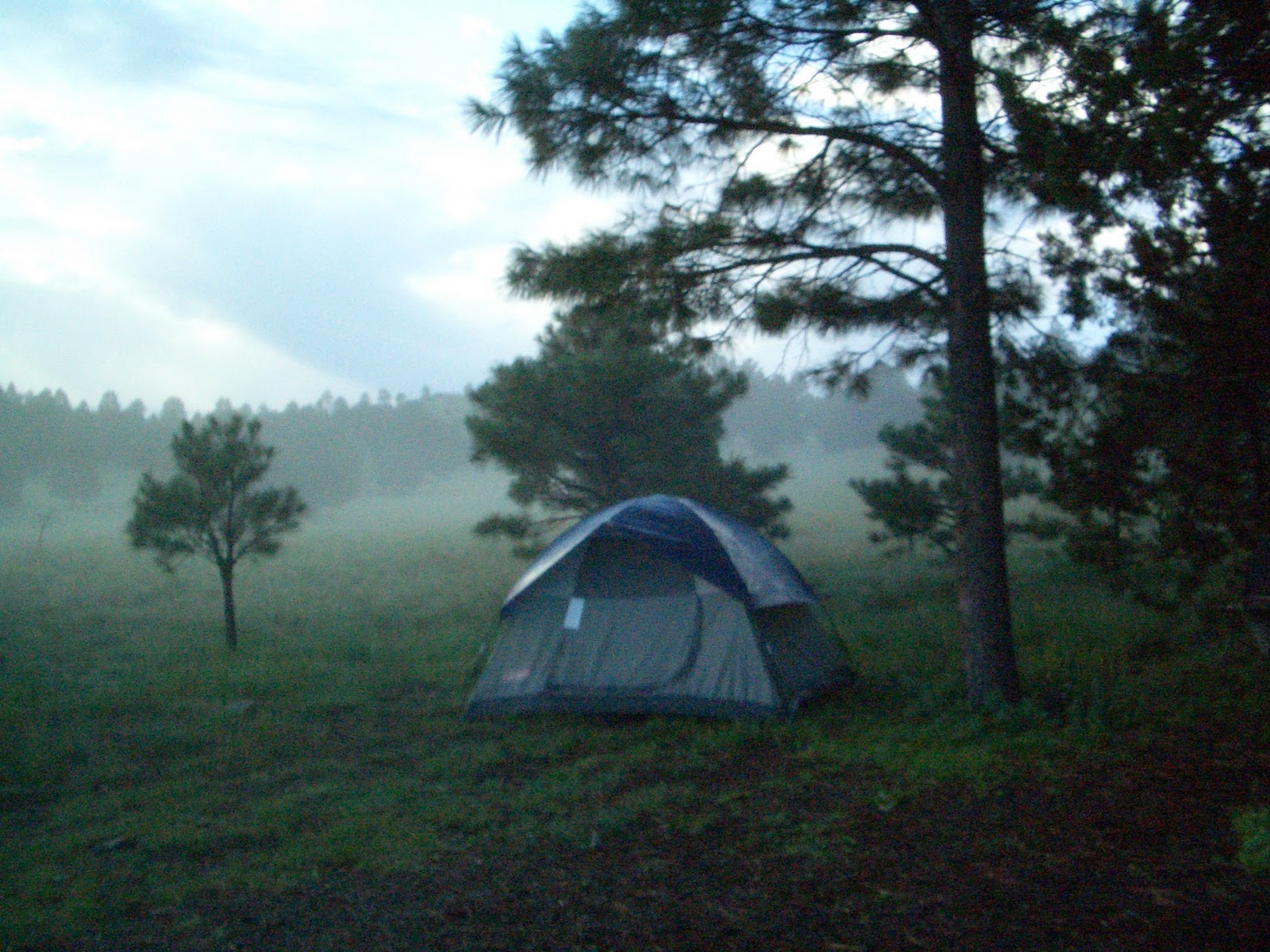
It also has cool looking fog
It ended up being rainy and really muddy that week, so the first day my boss spent a really long time walking down the road to see if it was drivable while I stood around and enjoyed the sunshine.  Nice.  When he came back, he told me it was too muddy and that we would be going to my quad instead.  Also very nice.

The drive was a lot longer than if we'd been staying at Negrito (which we could have because the firefighters were back) but whatever.  We listened to a lot of Rush Limbaugh.  Yeah....

My boss spent a bunch of time looking around for a "perfect" spot to dig a site.  I still don't like doing site descriptions because they take forever and there's a bunch of stupid crap to do with them, like counting sticks.  Yes, we count every single frickin stick.  I like coring trees, though.  It's sort of relaxing.  Unless the corer gets stuck in the tree, then it's a pain.

We ended up spending the next two days digging and describing two sites and then went home a day early because of the rain and mud.  It was late when we got home on that Wednesday night, but I couldn't really complain.  I was a home a whole day early! 

Matt was over at a friend's house so I went over to meet him, hung out for a while, went home, and slept in my own bed.  Lovely!

, ,

Pitchfork Canyon Update

Sep 5, 2011 4 comments

I am happy to say I am finished mapping Pitchfork Canyon!  After working with J, I spent two weeks working with Egghead and one working with my boss to finally finish it up and I am done done done done DONE!  So... now I get to start on a new quad.  Woo-hoo.  Hopefully it won't take me another nine weeks to finish.

Time is starting to run together so I'll try to recount what happened the best that I can, but it will most likely end up being just some random stories and pictures.  The two weeks I worked with Egghead went okay.  The first day of the first week he was getting on my nerves like none other.  I woke up in a horrible mood and then he took forever to get ready and was burping and farting super loud all morning.  I could hear it all the way across the camp site.  Gross.  Oh, and one day he didn't shut the bathroom door all the way and I accidentally walked in on him with his shirt off.  I'm just glad he didn't have anything else off, or I may have been traumatized for life.

But I got some good pictures of Elk Mountain.  Better than the ones from from before, because I had a better view.  I honestly can't remember if these were from the first week or the second, but no matter.  It's all the same.


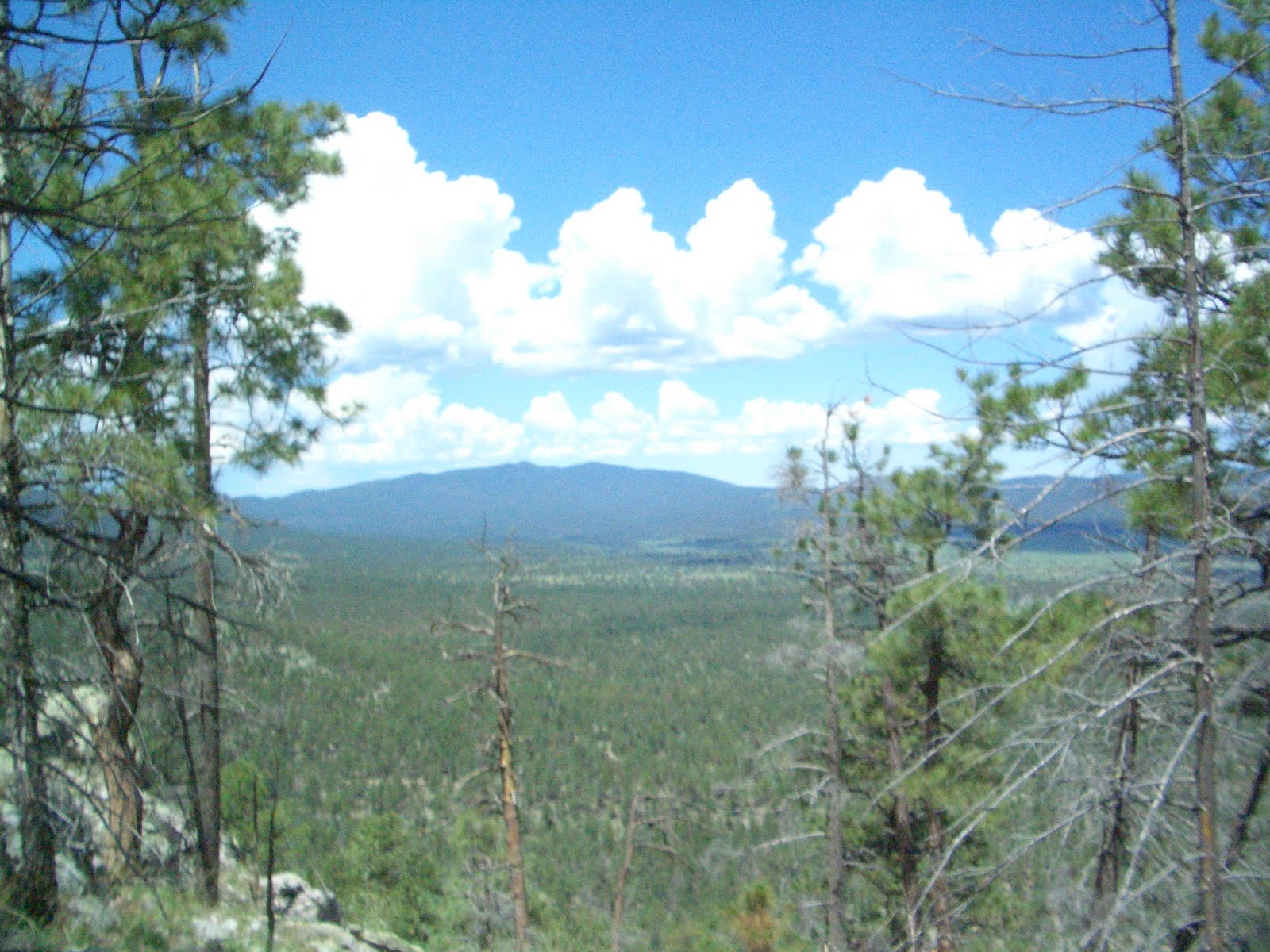
I also took some pictures from the top.  I have no idea what the mountain in the distance is, though.  Something in Collins Park quad, maybe.


And there were some sweet cliffs up there as well.


After that we got hailed on for about an hour and it was a huge bummer.  My butt was cold and our soil pit filled up with water, so I decided to be done for the day.


Since it had rained, the roads were all suuuper muddy, and sometimes trucks do not like muddy roads.  So I learned how to use the winch that day.  I will never call it a stupid winch again.  It's saved me two times already this field season.  Yay winch!

I also got to see Egghead's new apartment, because he doesn't have a car and he can't take all his gear on his bike, so on the way back to the office, we would take a little detour to his place.  The first week, there were about 8 cop cars at a house across the street, and a whole bunch of police all around.  All the neighbors were outside watching so I did too.  Five officers then went into the house with their guns pointed.  The one in the front had a really big gun, that Egghead told me the name of, but I forget now.  And the other ones just had small handgun type things.  I couldn't really see what was going on after that, but I heard someone say that one person was arrested and one ran away.  Then all the cops left and we did, too.

The next week, there was no more police activity, thankfully.  I decided to be nosy and look inside Egghead's apartment.  The whole place is linoleum tile.  Like a classroom or a hospital.  Earlier, he had asked me if I had lain my own carpet in my apartment.  I said no, that I had never heard of an apartment where you had to put in your own carpet.  He called me a spoiled bitch, and I told him he lived in the ghetto.  Because... ummm.... he does.

This past week with my boss was ok, but honestly, I think I'd rather work by myself.  Working with him makes me nervous because I'm constantly thinking I'm going to say or do the wrong thing.  He kept disagreeing with every call that I made, and double checking all my work.  It was annoying, because I don't think he does that with the other employees.   I don't know, though.  I haven't seen any of them in forever.

, ,

The 180

Jul 23, 2011 0 comments

Last week, J and I left our dear friend Egghead behind and headed to the field without him.  It was a super good week and I enjoyed myself quite a lot.  It's so nice working with someone I actually get along with.  I do hope the feeling is mutual.  At times, I feel like the annoying little sister, or like that 12 year old girl riding around with John Milner in "American Graffiti."  But I try to keep my annoying-ness to a minimum.

We saw some different animals this week, including a couple coyotes, wild turkeys and a horny toad.  One day, we were pretending that we were on a safari and kind of got distracted/lost.  Oops.

Horny toad waaa (that's what Matt and I call a baby : )


pink soil (made from weathered rhyolite)

Cute little drainage basin and awesome background scenery

Back in the office on Friday, I talked to my boss about my work, and he didn't really have much nice to say about it.  I'm trying not to let it get to me, though.  I know the work I did, and the effort I put into it.  I just have to realize that that's the way he is and I'll most likely never hear a compliment from him.  It's hard, though.  Next week, I'll do it all over again, and hopefully the negative comments will at least diminish.

,

How I Became a Geologist

May 15, 2011 8 comments

When did you decide to pursue this course of study? Was it something you've been interested in from childhood? Did you love playing in the dirt as a kid? If you weren't pursuing this course of study what would be your second choice? (from Carma)


How/why did you chose geology over english/writing? (from Pam)

As you can infer from the second question, geology was not my first choice.  It wasn't really even my second choice.  Not from the beginning, anyway.  In fact, I was completely uninterested in science.  I went to college planning to major in English with an emphasis in Creative Writing.  I wanted to be a journalist.  I joined the newspaper staff my freshman year in college and became a paid staff writer very early on.  I was Arts Editor for two years and Editor-in-Chief my senior year.  I liked the writing, page layout and the people I worked with (most of them, anyway).  But by that time, my desire for a career in journalism was slipping, for a variety of reasons.  Looking back, I'm not sure I should have dismissed it so quickly.  But I did.  And I gave it all up to pursue a completely new field that had never even phased me before.
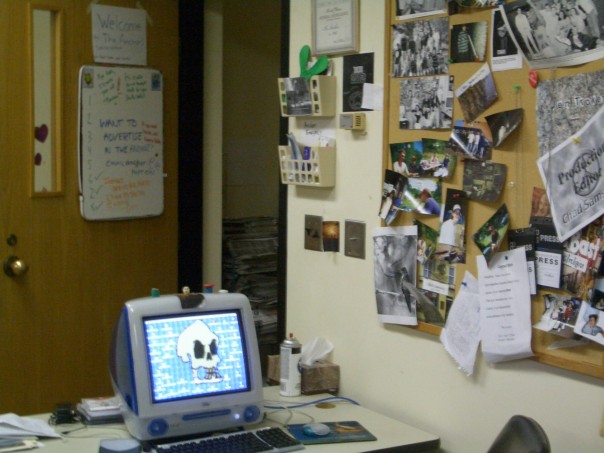
This is where I spent a large majority of my senior year.  Murray (the skeleton) and I had some good times together.

I first became interested in geology when I took a required science course called The Planet Earth.  In the beginning, I HATED it.  It's not a good idea to begin an intro geology laboratory with topographic maps.  HUGE turn off.  There are some complicated concepts that go along with them and when I taught my own students during grad school, they despised it as well.  But after that first day, the labs got better and I enjoyed the lecture topics as well.  On my first test, I got one of the highest grades in the class.  Then, for an English class, I had to write a paper on a controversial topic, and we had to interview an expert on that topic.  We had just been discussing creation vs. evolution in geology, so that was on my mind.  I asked my professor if I could interview him.  It was a bit of an awkward interview, which I later found out was due to the quirks in that particular professor's personality.  But while we were talking, he asked me what I thought about getting a major in geology?  My first thought was 'Ummm....what?  No way.  I'm not a scientist.'  But I couldn't get it out of my head.

After that, it was really just a progressive decision that happened over time.  I felt much more comfortable and at home in the geology department than the English department.  I got to look at rocks and go on field trips.  I liked the people better.  When I got stressed about the newspaper, I'd go work in the geology lab. But one main determining factor happened during my sophomore year.  The career counseling center called me up and basically forced me into doing their "sophomore spotlight" career thing.  So I went and the whole time the girl talked about how I could work at a publishing house.  It was just "blah blah blah publishing house."  And that sounded really boring to me.  (this seems funny now, considering...) I thought if that was what I was destined to do with an English degree, then I didn't want to do it.

That same year, I declared a minor in geology.  (I still wasn't totally committed to the degree yet)  I talked to the department chairperson at the time about what classes I should take and I signed up for them.  One class I took was a field course over spring break.  We went to Arizona, and it was amazing.  I learned so much.  It was sometime during that trip that I could no longer imagine my life without geology as a part of it.

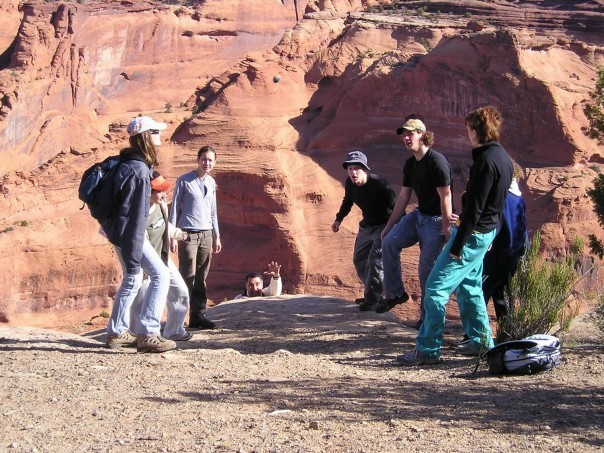
In Arizona, we played hackey sack while our professor was falling off a cliff in the background.

Soon after that, I talked to my professor (the same one I interviewed my freshman year) and he said, "You know, if you just take these few more classes next year, you could get a major."  I had never thought of that.  I wanted to do it, but I needed some more confirmation.  So I did what I thought was best.  I called my mom.

To answer the question "Did you love playing in the dirt as a kid?"  Yes, in fact, I did love playing in the dirt as a kid.  I LOVED the sandbox.  We didn't have a liner on the bottom so we could dig all the way down into the soil, which was all clay-ey.  I thought that was totally awesome.  I also loved picking up rocks.  I'd forgotten about it, but I had a huge collection in the garage.  So when I told my mom I wanted to major in geology, she was not surprised at all, and told me to go for it if that was what I wanted.  That was all I needed, and so, at the end of my junior year, I declared a major in geology.

In the end, I graduated with a double major in English and geology.  So I suppose I could still be a writer if I wanted, but like I said, I can't imagine life without geology.  At the same time, I can't imagine a life without writing either.  Blogging helps with that, but I'm realizing that I want writing to be part of my professional life as well.  I feel like my current position does not showcase my natural talents as much as I'd like it to.  This is part of the reason why I want to do research.  A big part of research is writing and publishing papers, which I would be good at.  My thesis committee in grad school complimented me on how well written my thesis was.  So I know I can write about scientific topics.  Maybe I could be a science writer.  But I also want to do at least some of the science myself.

Overall, I'm happy that I was introduced to geology in college.  If it hadn't been for that, I wouldn't have had many of the experiences and met many of the people that I have.  I learned a lot about science and also about myself during that time.  I hope that this next chapter of my life will build on those experiences to give me all that I hope for in my life and my career.  We'll have to see what happens.

Science-ish Questions

May 10, 2011 7 comments

Welcome to questions part two!  These are mainly related to science/field work.  Things like that.   With some other stuff thrown in for fun. 


When you take samples of soil from a given area, how many do you take? (From cgbookcat)
Generally, the only time we collect samples is when we dig out a site.  This is different from our normal everyday mapping, which are just "observations," or small holes that we dig to get a basic idea of what we're looking at.  Site descriptions are done in much more detail and the holes are bigger, so we can see better and describe it in more depth.  Each person on the crew does about 3-4 of these per year.  We take one set of samples at each site, which are collected in special cardboard boxes with separate partitions for each horizon.  These are kept on hand in our office mainly for reference purposes, so that we can run color and pH tests.  For pH, I use indicators.  Various indicators are mixed with the soil, and then drained.  The color that comes out in the liquid indicate what the pH of the soil is. This can be done at the office and don't require a lab.  Honestly, I prefer a pH meter.  It's much more straightforward (if it's not broken), but unfortunately we don't have one of those.


Do you do cores so you can see layers? 
We do not take core samples and the main reason for that is the soil here is much too rocky.  I've used an auger before, in training.  They're really nice and way easier than digging a 100 cm soil pit, but it just doesn't work in this climate and soil type.  The best place to use them is in the Midwest where there is a lot of agricultural land, glacial till, stuff like that.


What kinds of tests get run on them? 
There are a variety of tests that we can run on soil samples, for various purposes.  If we just need to do basic property tests, like I described above, we use the box samples.  If we need to do more complex tests, they get sent out to a lab.  For this, we'll collect a larger sample, like in a ziploc bag or something.  Examples of tests that would be run are calcium carbonate equivalent and cation exchange capacity, which basically tell you how much carbonate or clay-type molecules are in a sample.  We can also get a more accurate percentage on particle size using the hydrometer or pipette method (which I have learned about a little but it's been a while). However, sending samples to the lab is extra time and money that we don't particularly want to spend, so it doesn't happen too often.

How much analysis can easily be done from the site, and what proportion of them need to be brought back for lab tests? 
Most analysis is done directly from the site.  We analyze physical soil properties and plant characteristics right there in the field.  This gets documented and we use that documentation and its interpretations to make our maps.  We use lab data mainly to confirm soil taxonomy, which often requires things like a specific particle size ratio or a percentage of a certain mineral or something like that.  A lot of times we can just infer a lot of it from previous data or other information that we've been given, and the lab data is more of just a back-up. 

What kinds of stuff are you looking for?
What we do is called Terrestrial Ecological Unit Inventory, or TEUI.  The name, Inventory, says a lot about what we do.  It is mainly about collecting data and creating a map from it.  We look for patterns in the landscape, vegetation and soil type within a certain geology or parent material so that when we make our maps, we have some consistency in our data and how our maps come together.  The final product is entered into a database so that land managers, researchers and other staff can look at our data and use it as necessary.

First question: What is an ANZAC? :) (from off-black)
Oh oh, I know this one!  ANZAC is Australia New Zealand Army Corps.  Yep, I'm so smart.  Haha.  Thanks for the info.  Americans seem very hesitant to teach much more than American history.  I learned that in England when some little kids were spewing off a bunch of info about the Iron Age and I had no idea what they were talking about.  You learn something new every day. 

Just kidding, actual question: Weirdest/most unusual thing you have had to do in the field?
Hmmm... the weirdest thing?  I think I've been doing this so long, nothing really seems weird and unusual anymore.  I asked Matt if he remembered me telling him about anything and he said, "tell them about the poop sack." Which doesn't even have to do with field work.  It's for caving.  You're not supposed to go number 1 or 2 in a cave, because people crawl around in there and that would be gross.  So you bring ziploc bags, and go in them.  You can also use a "pee bottle"  or a bag that holds a material that will convert your pee into a weird gel-like substance.  The poop bag is also called a burrito bag, in case you were wondering about that.  I guess, in general, using nature as facilities was one of the main things I had to get used to when I started doing regular field work. But it's just one of those things you have to do, you know?  There's even a plant called mullein, aka Indian toilet paper, that you can use for such occasions, but apparently it will give you a rash if you use it too much.  Sorry if that's TMI, but you asked  ; )
If, after this, you're like totally WTF, well... I was too at one point.   Until I became a geologist.  I will explain how that happened in the next Q&A post.

,

Alabaster Cave

Apr 5, 2011 3 comments

It wouldn't be Adventures in the Underground without me posting about my first caving trip.  On Sunday I went with my caving class to Alabaster Cave, between San Ysidro and Cuba, NM.  It was cool!  Our teacher told us it was a training cave, meaning that if you can get through this one, you are ready to go on to even bigger and better cave adventures.

Just to give a little background, alabaster is a type of a rock called gypsum, or CaSO4-2H2O for you chemistry-minded types.  It forms by evaporation of salts from water, also known as a chemical sedimentary rock.  I was first introduced to gypsum in college when I went to a mine for my intro geology class.  I remember liking it so much, I even made up a poem about it.

Oh gypsum you're the one
in many different states you come
coarse, satin, alabaster
you are much better than plain old plaster

(which is funny because you can totally make plaster out of gypsum)

We arrived at the cave site at about noon, got a little introduction/safety briefing, and then were told to squeeze through the tiniest hole to get into the cave.  When our teacher first pointed out the entrance, I thought "yeah, right, buddy."  But it wasn't so bad once I got down in there and actually saw that I could do it.

We wiggled through a crazy narrow passageway into a large "room" that easily fit all six of us on the trip.


We continued to make our way through short passages, like this one, that required crawling and sliding on our stomachs to get through. 


This is where equipment like knee and elbow pads become essential.  And even with them, my knees were still incredibly bruised, and my arm and leg muscles still very sore.

In the cave were some pretty cool things.  We were told that we may run into some wildlife, mainly of the bug variety, but we were definitely not expecting this.


Bats don't typically live in this type of cave.  I can't remember why now.  Sorry.  Probably because it's too shallow or warm or something.  It was awesome, though. 

We each took turns leading the way.  When it was my turn to lead, I had to lead us toward the light, which would be our exit.  And when I got there, it looked like this.


I thought it was cool looking with the light coming in through the small passageways, but that also meant we would have to once again squeeze through to get out.  For this particular tunnel, we sent the smallest kid in first and we had to take off our helmets to be able to make it through, while pushing our backpacks in front of us.

Even though that was our exit, it wasn't the end of the trip.  First, we wanted to go see the water.  The way to get there was to go past the entrance, down through a narrow passageway and into a really cool tunnel, which we entered here. 


The way in was either to crawl behind the weird sticking up rock or to climb above it.  I chose the easy road and took the low tunnel, which was pretty neat, and led me to this.


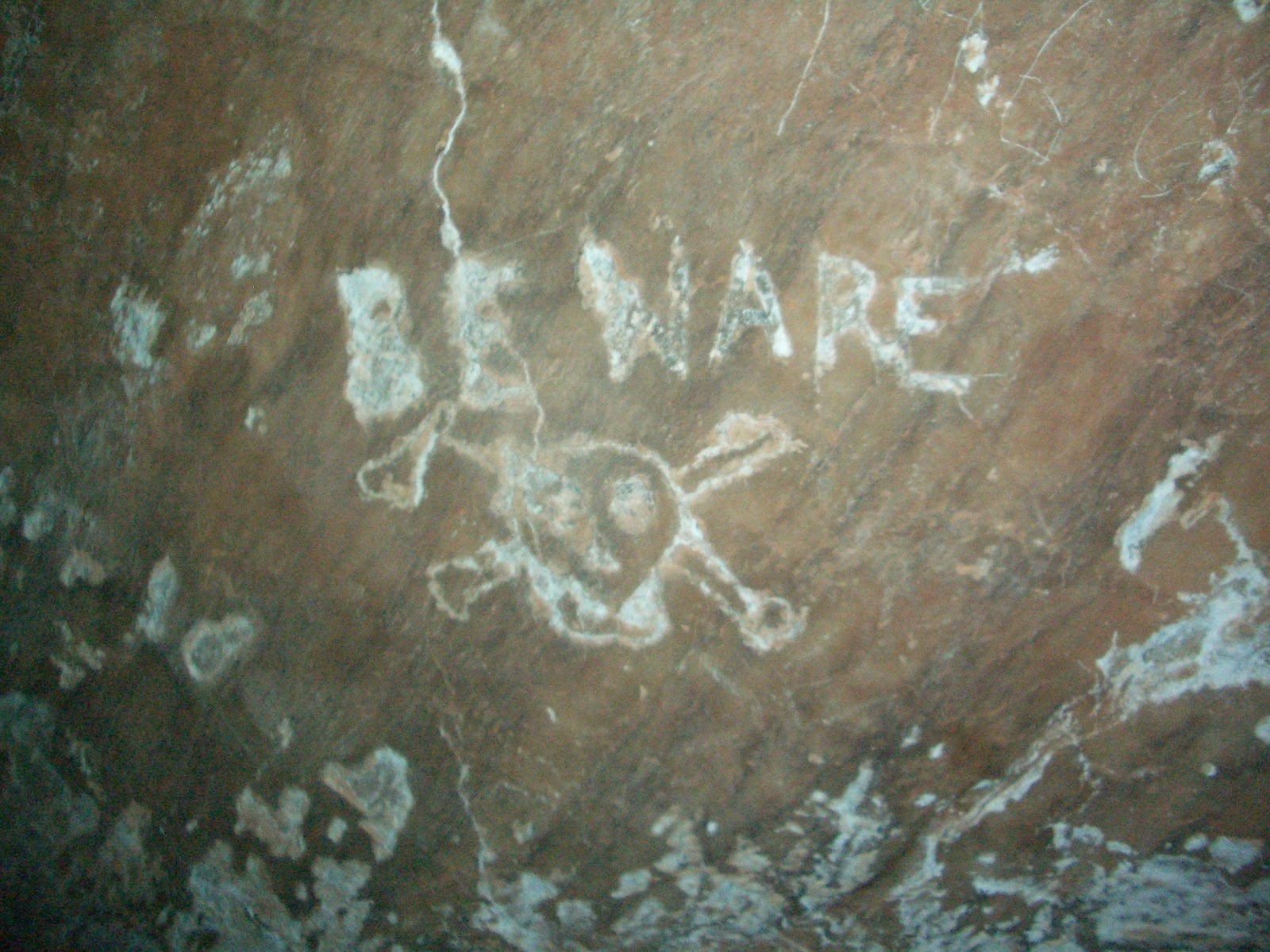
A warning?  Maybe.  But not too long after that, we found the water, which led to yet another exit. 


Murky and stagnant, this water was around 35 degrees and went up to above chest height before leading out through the cave exit.  The crazy boys in the group decided to go out through that way, while the girls, choosing not to get wet and even more gross, decided to backtrack to the original exit.

After attempting to remember which path we had taken to get there (which was difficult), we finally made it back to the exit, and outside into the sunlight.


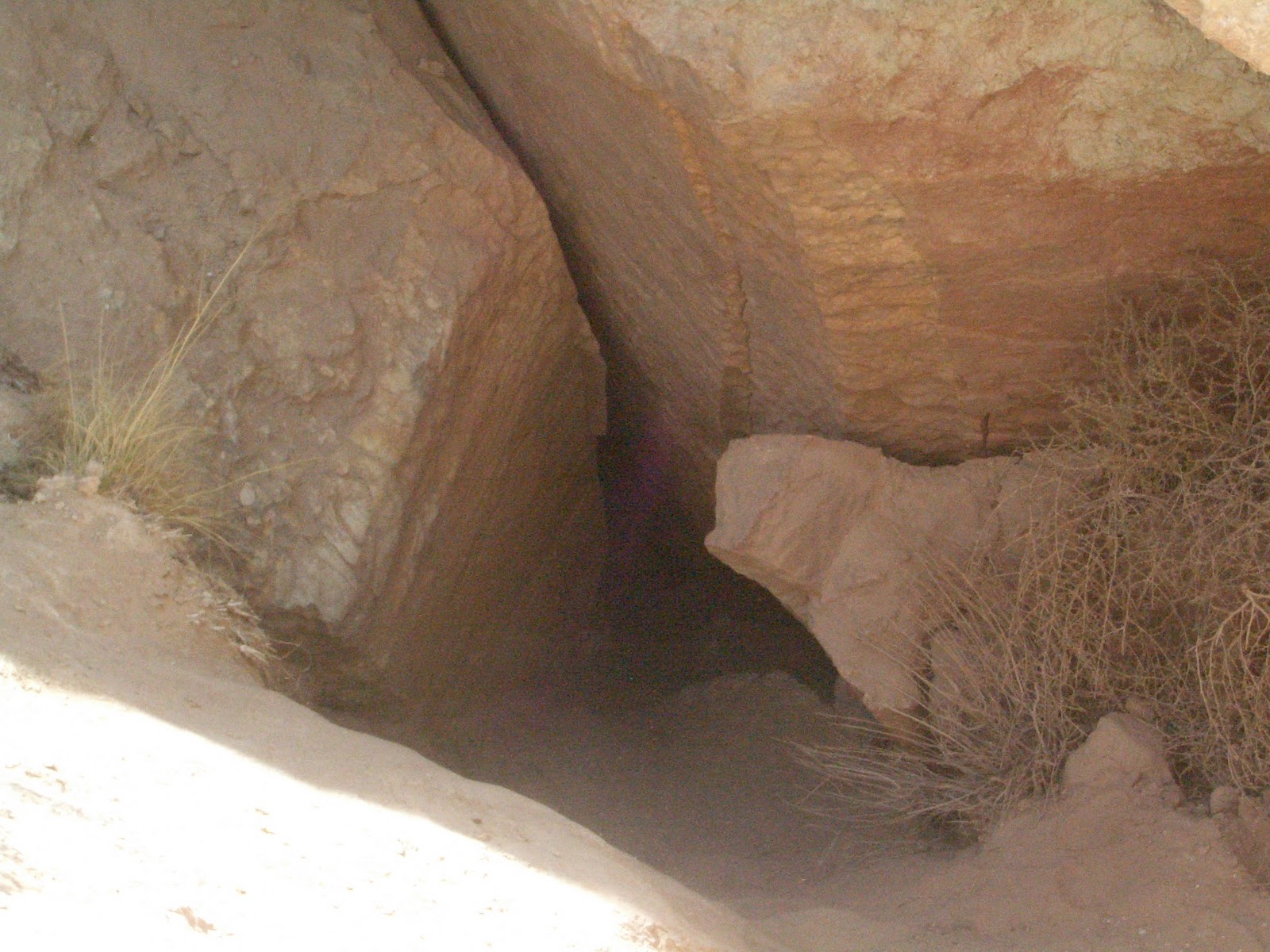
See that teeny little hole?  Yep, that's what we crawled out of.  Pretty wild, huh?

The one thing I could have used, but forgot, was a dust mask.  Gypsum is very soft and erodes easily (hence the cave being formed) so it was really sandy and dusty in there, and at times I even picked it up with my camera.


Breathing in gypsum dust is not that awesome for you and when I blew my nose it came out looking all gross.  I didn't take a picture of that (you're welcome).  Luckily, I had a bandanna that I tied over my mouth and nose, which I'm telling myself helped a little bit.

All in all, it was a good trip.  Next stop: my old stomping ground, Socorro!

,

day thirteen: someone you would want to switch lives with for one day + why

Nov 29, 2010 3 comments

A while back, I watched a really cool documentary about caves.  The story followed the travels of two women, a biologist and a professional caver, to three different caves around the world.  It was incredible.  From belaying in the Grand Canyon to spelunking in South America.  I have always loved caves, well, ever since my 8th grade class trip to Washington DC and our little side trip to the Luray Caverns in Virginia.  Or maybe it was the iron ore mine on our family vacation to the U.P. back in elementary school.  In any case, I like them a lot, and I envied these two women who are able to spend their careers exploring their depths.  So when I saw that the community college I (sometimes) attend was offering an Introduction to Caving course, I signed up for it.  I have until tomorrow to make a final decision and pay for my classes (I'm also taking Database Design and SQL).  Should I do it?  Should I do it?

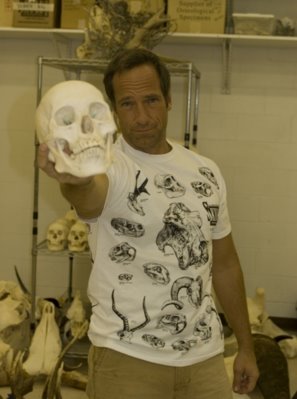
But really, I'd switch lives with anyone who gets to do cool stuff for a living.  Like Mike Rowe.


He gets to meet new people and try out a different job every day.  Admittedly, some of them aren't so pleasant, but I'd just pick a day he was doing a fun job (like ping pong fireball shooting!) to switch with him.  Plus, he's cool.  Ok, maybe I just want to meet him.  He should do my job for a day!


Or I'd totally switch with any research scientist who has ever been featured on NOVA.  Not that I necessarily want to be on NOVA.  I just want to try doing their jobs.


So, basically, I'd trade my science nerd job for another, different science nerd job.

, ,

day five: favorite superhero + why they are your favorite

Nov 12, 2010 2 comments

This one was easy peasy!  My favorite superhero is, and always has been...  du du du du...


Inspector Gadget!

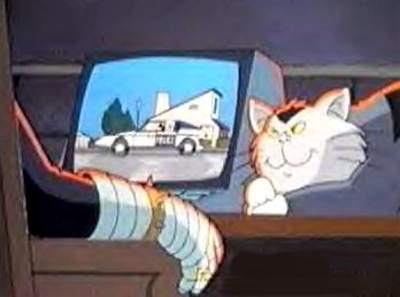
Why?  Because he's awesome.  He has lots of cool gadgets that don't always work right, which makes him even more badass because it never brings him down.  In the end, he still gets the job done, even if it is done so with the help of  his niece, Penny, and his genius dog, Brain.  They're his sidekicks, his partners in crime-fighting, even though he may not always realize it.  I also like that the Chief always has something self-destruct all over him.  And of course, the mysterious Dr. Claw and his cat.

I'll get you, Gadget!  Next time, next time!!!

Funny, entertaining, nostalgic.  What more could you want in a superhero?

Of course, if I did have a runner up, I'd have to pick


Donatello from the Teenage Mutant Ninja Turtles.

What can I say?  I like the scientist/inventor type.

,

Snow Lake

Aug 21, 2010 4 comments

This past week, while I was working, I stayed at a new campsite by Snow Lake.  Everyone else was staying in a hotel (wimps!) and my mapping area is a lot closer to Snow Lake than Ben Lilly.  So, it was just me and my boss.  Camping.  For three nights.  Fun.

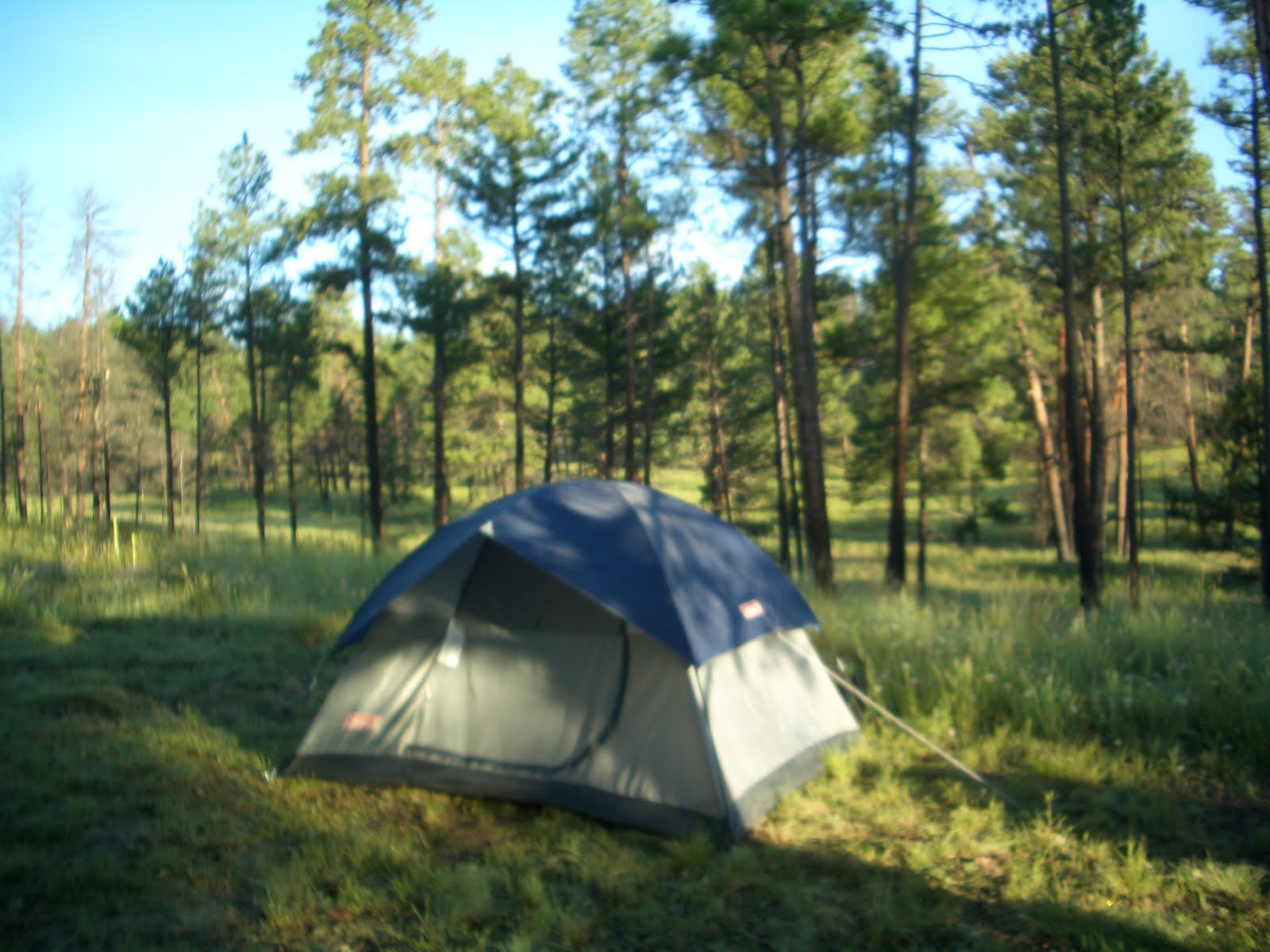
Here's where we camped, along with a group of drunk male college students, who said "Dude!" to each other like a million times within a 5 minute period.


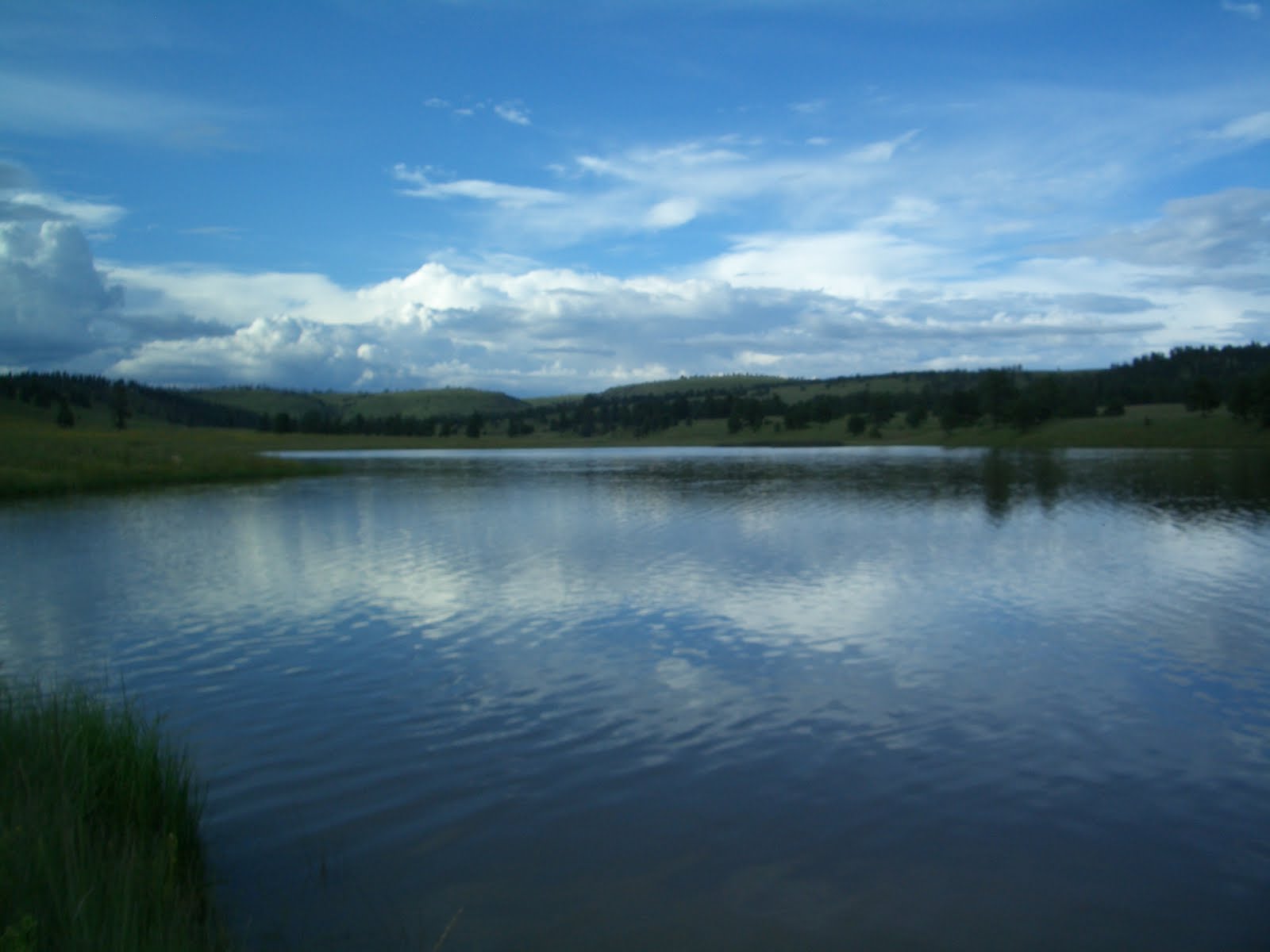
On our last night there, I finally had a chance to get some pictures of the lake.  Here it is in all its Snowy, Lakey glory.


In Michigan we would call that a pond, but we also would call hills "mountains," so you win some, you lose some, I suppose.  It's still really pretty, though.

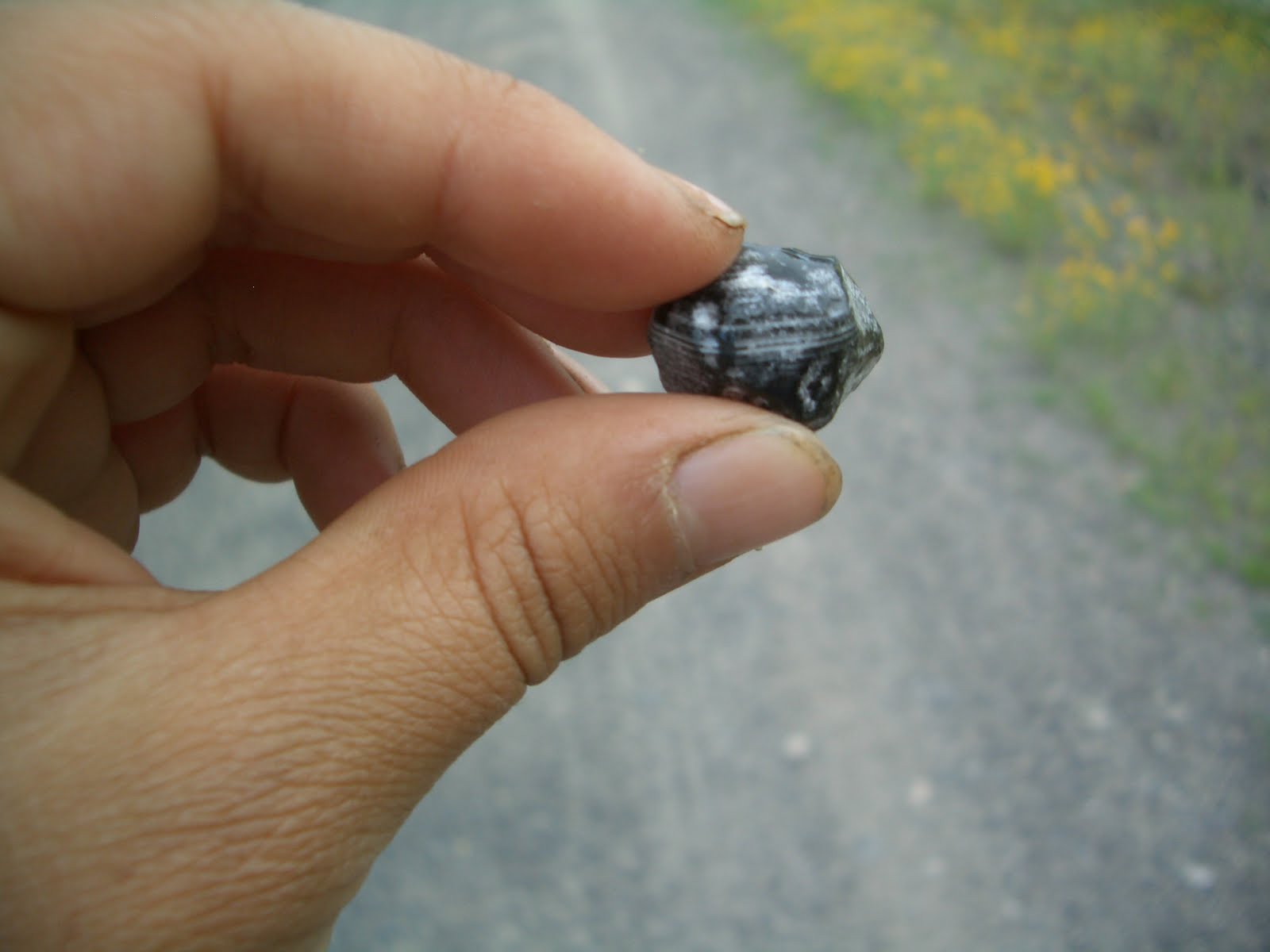
On my journey to the lake, I found a really cool looking rock.  It looks like obsidian but it also has some weird silvery-white stripes on it.


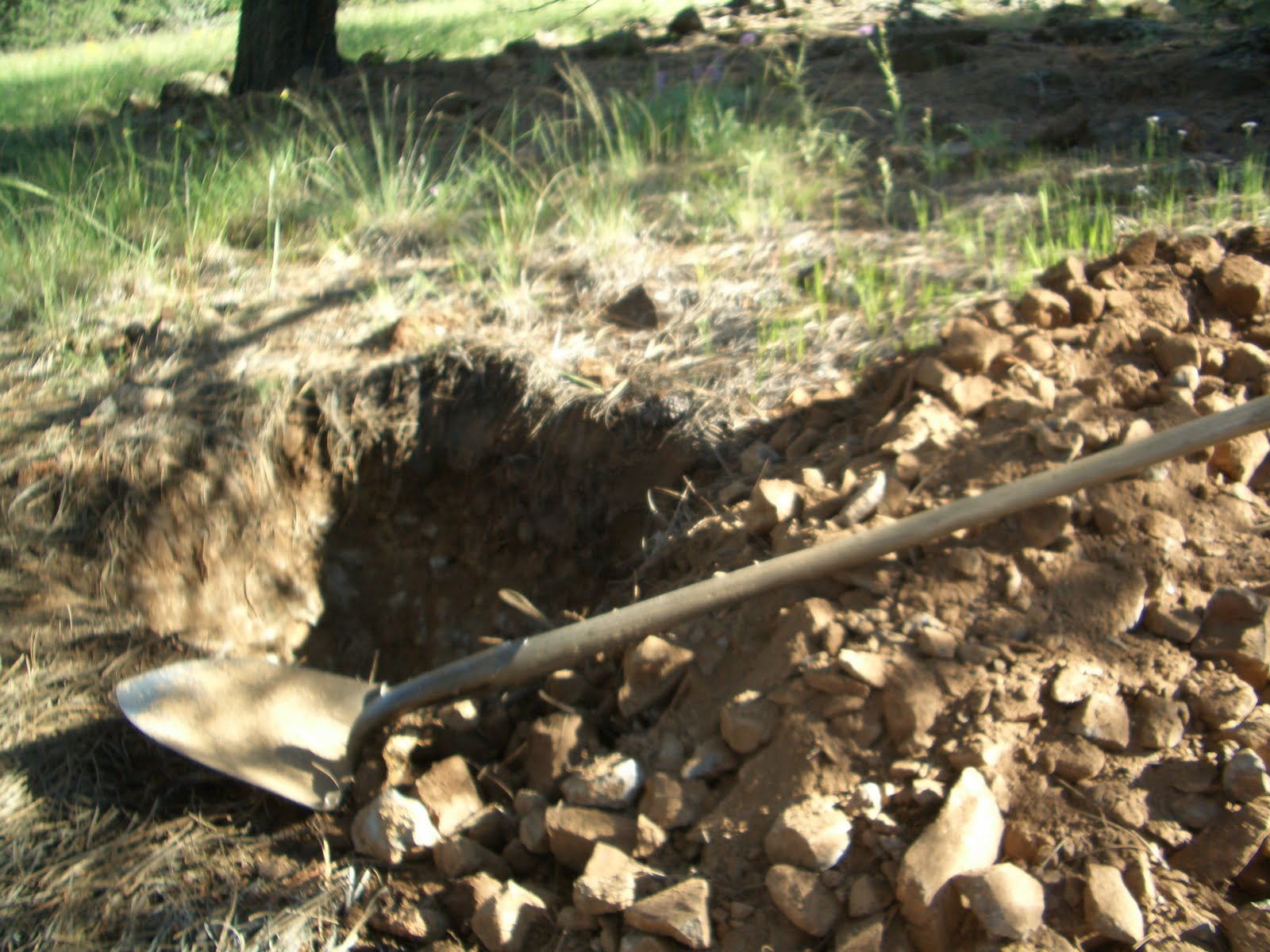
Believe it or not, I did some actual work last week as well.  Every year, we have a field review to show an example of the work we did, and for that we dig a big 1m x 1m pit so the main boss can look at it.  Here's the first one I dug. 


It was NOT fun to dig, because, as you can see in the pile next to the pit, there were about a thousand rocks getting in the way of the soil.  Want to know the best (aka worst) part?  After we had finished digging, we found out that the plot didn't fit the map unit we wanted to put it in because there were no oak trees around.  So I got to go down the hill and dig another, much deeper one.  It was AWESOME.  I didn't take a picture of that one.

One pit we dug was in an interesting looking flat area mostly covered with iris and a grass called spike muhly.

Spike Muhly, image from USDA Plants Database

And here's what the site looked like.


Another day, I saw a cool frog and tried to take a picture but I was too close and it turned out all blurry.  Too bad!


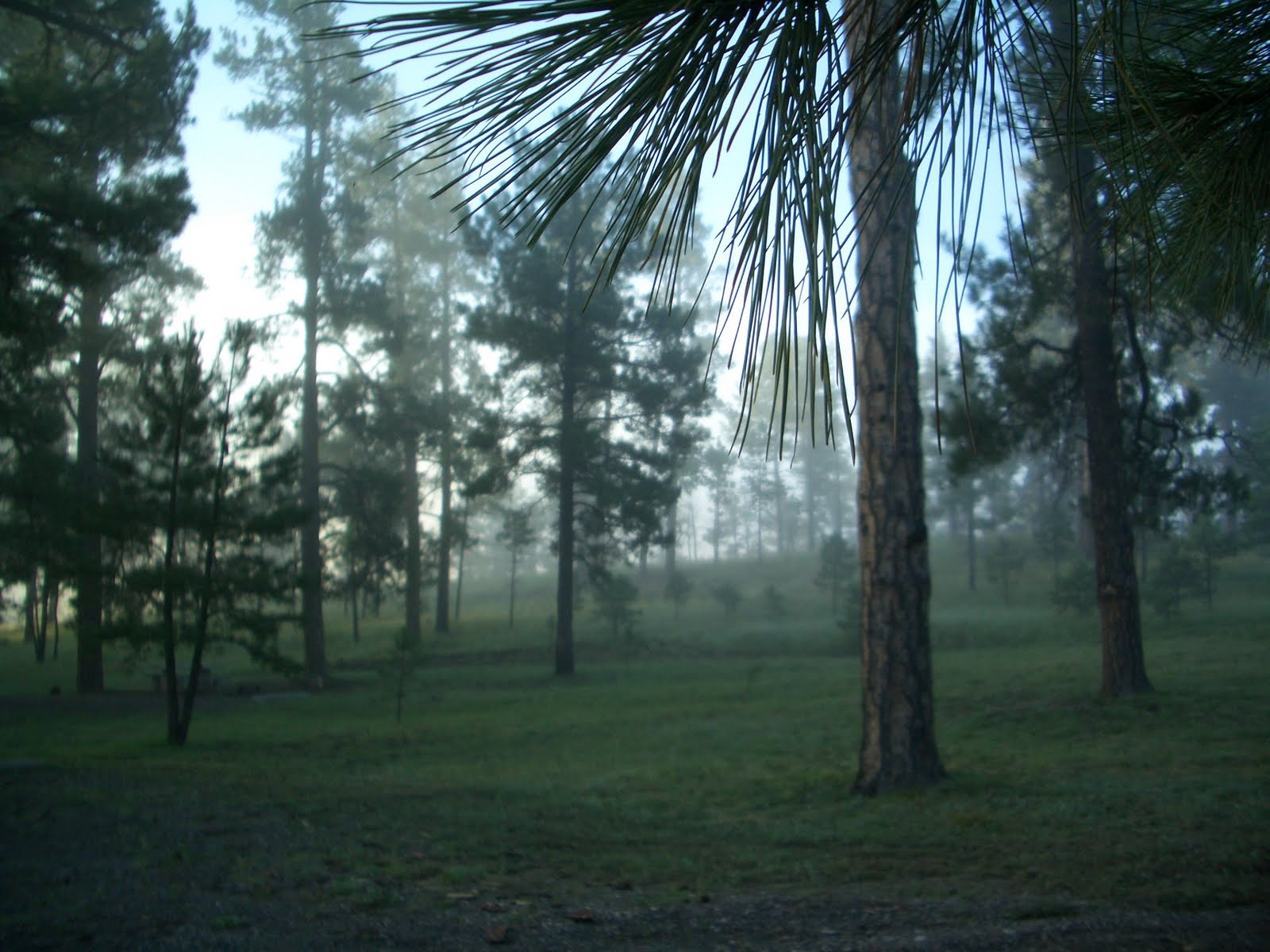
Not to be deterred by my poor photography skills, I ended the week with a cool misty morning picture of the campsite.

,

Ben Lilly

Aug 14, 2010 4 comments

For the past four weeks, I have stayed at a lovely little campground in the middle of the forest called Ben Lilly.  I have no idea why it's called that.  Probably after some old rich dude who gave the forest a lot of money.

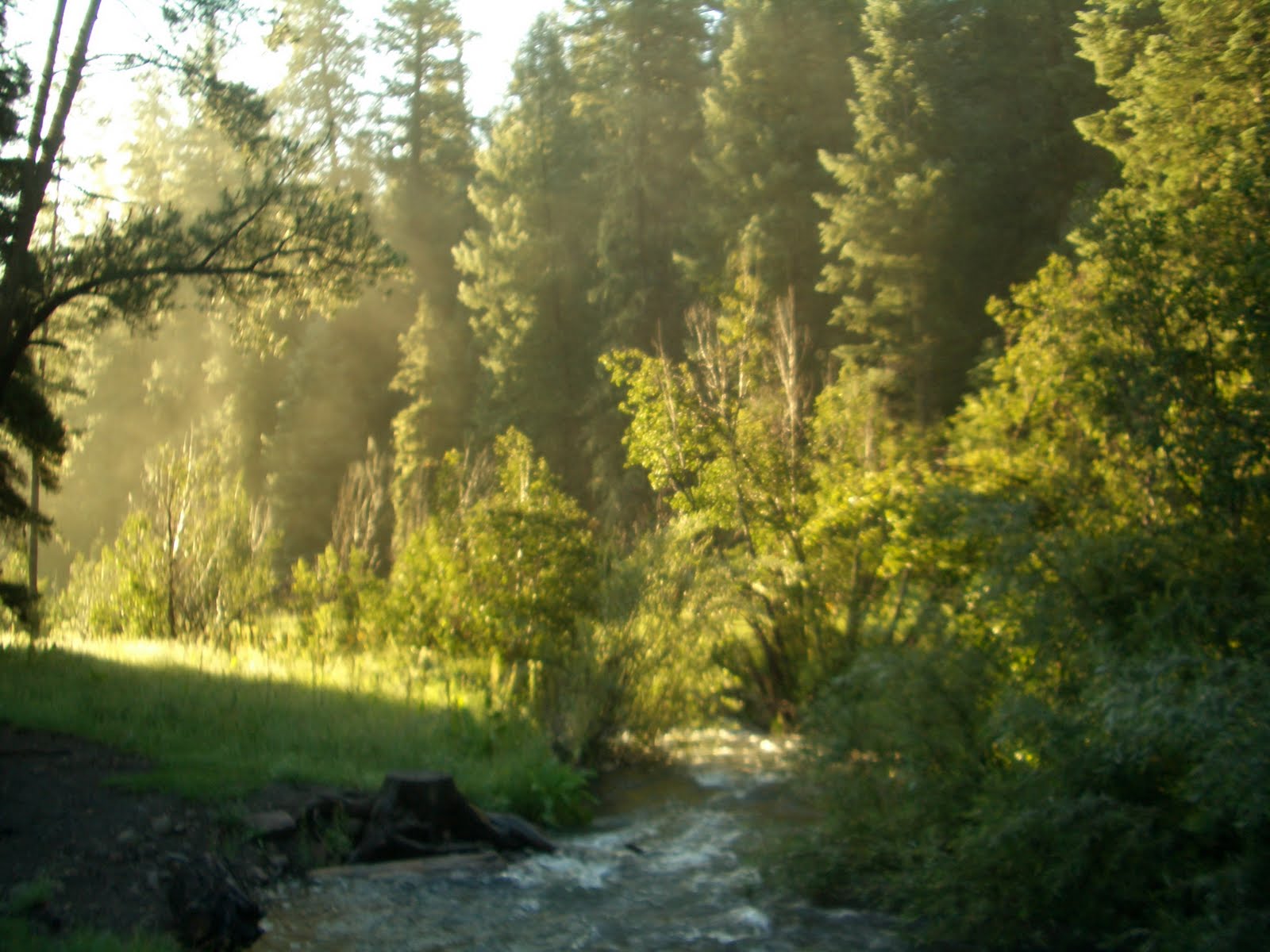
Anyway, it's pretty.  Here's what I woke up to one morning when I looked out of my tent.


The stream that runs through here is called Willow Creek.  It's a smaller stream that feeds into the Gila River.  There was record snow pack on the mountains this year so it's flowing really well.  It was nice listening to it rushing by as I fell asleep at night.  Very peaceful.

The camp site is pretty high altitude so there are a lot of cool trees I don't usually see like Engelmann and Blue Spruce.  But the elevation drops off pretty quickly as I get more into my mapping area and it looks really different.
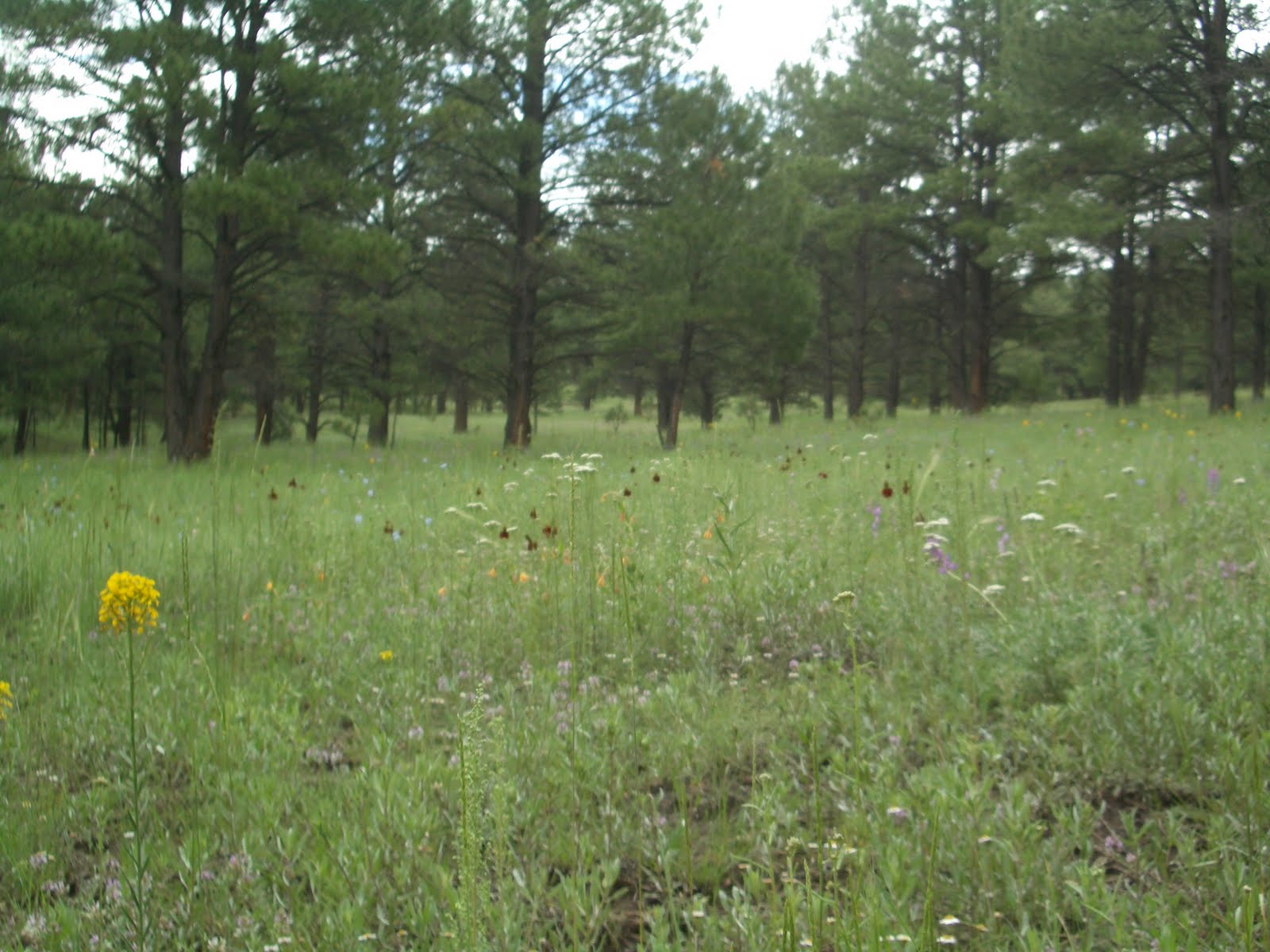
A lot of what I'm working in is in the Ponderosa Pine forest, which is a couple columns, or climate zones, lower than the Spruce/Fir forest.  It's different looking, but still really pretty.


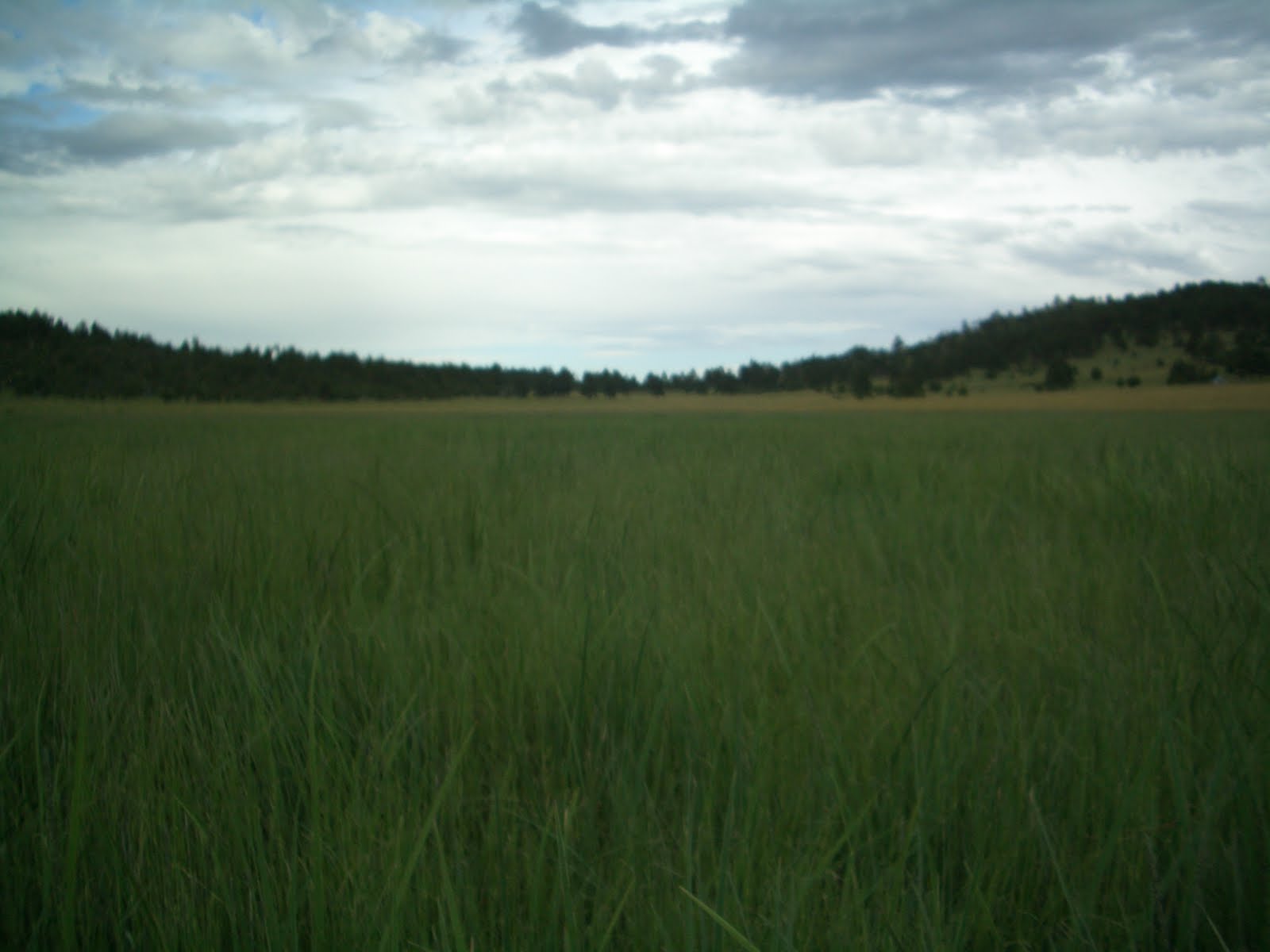
Then there's a huge part of my mapping area that is really weird.  I'm still trying to figure out what's up with it.  It's a lot like the Ponderosa forest in terms of grasses and forbs (flowering plants) but there are hardly any Ponderosas at all.  Instead, there are scattered junipers and a bunch of open grassland.  Here it is with a storm brewing overhead.


A possible reason for all this open area is fire.  There are a lot of areas with burned trees, so it's definitely prone to it.  This part has just had enough time to get back to a juniper grassland, and the Ponderosas in similar surrounding areas indicate that it's trying to get back to a Ponderosa forest.  This is what I am trying to show with my mapping. 
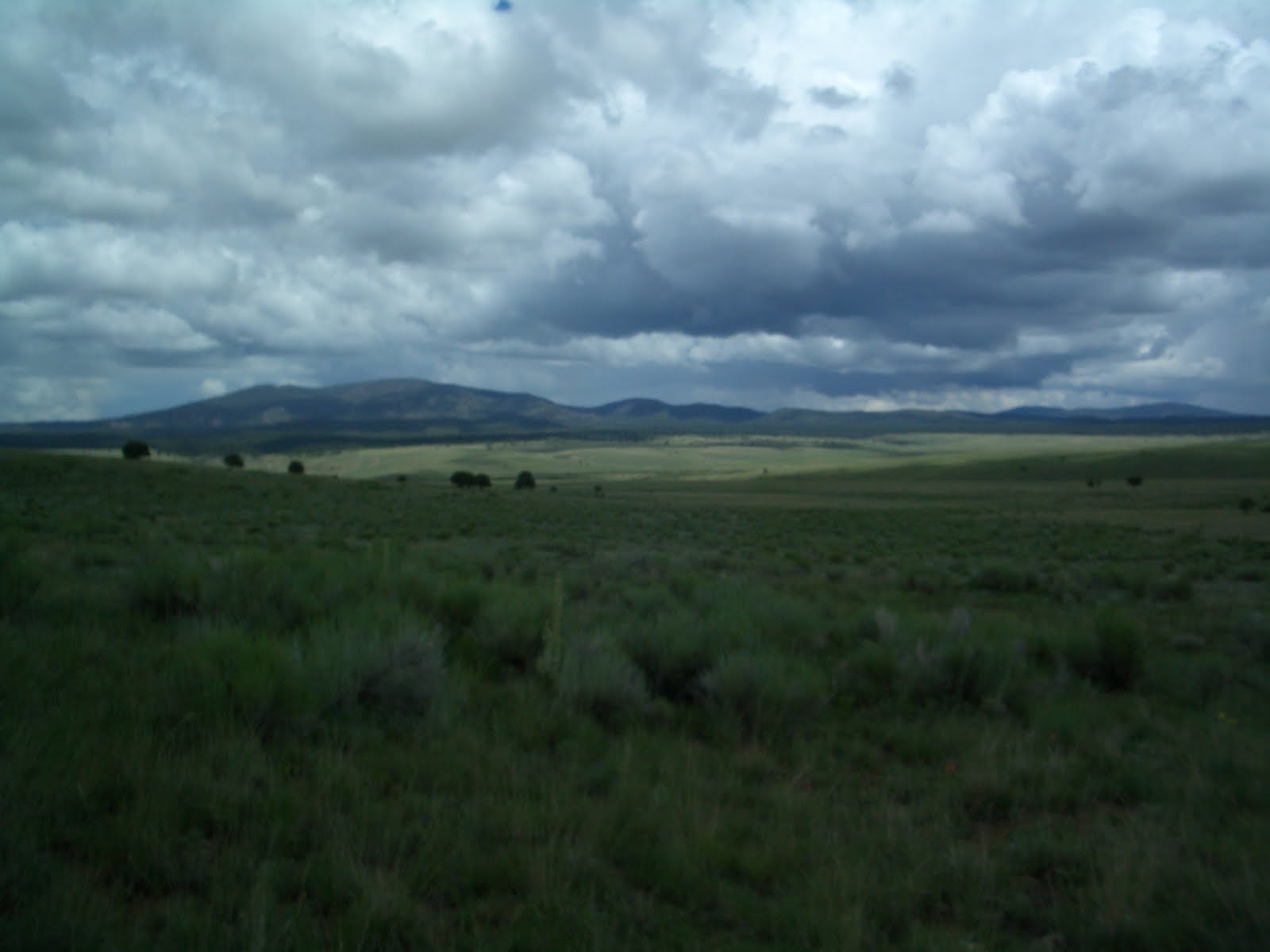
So that's just a little bit about where I'm working and what I'm doing.  I won't bore you with all the details but hope you enjoy the pictures.

, ,

The Way it's Always Been

Apr 15, 2010 5 comments

I used to write almost every day.  It was a part of me.  It was what I was good at.  I wanted to be a journalist, because it was exciting and challenging.  I loved creating a product, something that was mine, and providing it to the community.  But over time, it became a burden.  I was stressed out all the time, and it was because of this "job" I had.  I didn't have the time for many of the other activities I would have liked to participate in.  And because of my anxiety, I was afraid that I would never make it in the cutthroat journalism business.  I felt it had been an enormous waste of time.

When I discovered geology, I became interested and engaged once more.  In studying the Earth, I found something in me that I thought I had lost.  I spent the next several years throwing myself completely into the Earth sciences, and journalism was all but forgotten. 

But I was still writing.  I concluded my graduate student experience with a thesis and two published papers under my belt.  I remember getting the first draft of my thesis back from my advisor, and him telling me it was better written than his first draft as a Master's student.  I was very proud of this compliment.  Naturally, I am not exactly scientist material.  It's just something that happened along the way.  Writing is my true talent.

I love words.  The way they sound, what they mean (especially when they have multiple meanings), the way they can be strung together to make endless sentences.  It's fascinating.  I also like how letters can sound different in different words, depending on where they are placed within a word.  Think about it, it's cool.
 
Let's face it.  I am a huge word nerd, and often fused my love of words with my love of geology, as evidenced by this old post from September 22, 2006.

waiting for the epoxy again
This week was a busy week.  I... learned some things about structure, taught some kids about minerals (and got a good evaluation! yay!), got my soil chemistry book in the mail and was actually kind of excited to read it, got a little better at catching a baseball, and threw one that hurt Caro's hand, was late to a meeting and got my name on the board, learned how to save people's lives, drank a lot of mountain dew, got really excited about mineralogy (and was confused as to why no one else seemed to be), bought some really expensive chai tea, handed in a lot of forms, made some new goals, lost my office mate, said goodbye to Nathan...

I felt very strange this week.  I'm not really sure how to describe it.  Maybe happy?  Productive?  But I'm not really sure if I was productive or not.  But anyway, I dunno, I was thinking about geology words and how they're so grand sounding, especially the way people here say them, like provenance and detrital.  Such good words.  Hmm, that's kinda random, but I like words I guess.  I think I am getting excited about geology again.  Like real geology.  Not just 101 stuff or how to present a paper on some topic or another.  But the actual act of learning new things about the earth.  I feel like the way I did when I first started learning about optical mineralogy, with the oil and becke lines and birefringence and all that stuff.  that was some good smelling oil.


I love this, and I love that I felt that way at least once.  It gives me hope.

,

During Spring Break, I Took a Class

Mar 21, 2010 2 comments

Spring break from school really is not the same at all when you also work full time.  But the timing actually worked out really well for me last week because instead of normal work, I spent the week taking a plant identification course with some of my co-workers from the other forests in New Mexico and Arizona.  We didn't get out of class until 5pm which would have meant I would have had to rush to get to school on the other side of town by 5:30.  I also got to spend some time with my out of town friends and Matt on St. Patrick's Day, which is normally a class day for me.  So it worked out perfectly.

During the class we looked at A LOT of plants ranging from flowered plants (including composites, dicots and monocots) to grasses and sedges, because those are the hardest for most people to learn and pretty much all we could cover in one week.  

The class involved looking at plant samples with the naked eye, with hand lenses and through microscopes to be able to see the tiniest parts of the plants characteristic in helping to identify what kind they are.  It was not easy and got pretty repetitive at times, but I found myself getting better and better at it every day.  That made me feel good.

To help us identify the plants, we used a 2-volume publication entitled A Flora of New Mexico by Martin and Hutchins.  It is set up as a taxonomic key -- utilizing couplets allowing the reader to choose between different plant characteristics to finally determine the tribe, species, family, and variety of a particular plant.  It's a decent publication but was published sometime in the 80's, I believe, and a lot has changed since then because botanists get bored or something and change plant names all the time.  There are also bad couplets, meaning that if you choose one thing saying a plant may or may not contain a certain trait, there is the potential to go on to the next couplet in which you must describe the trait that the plant may or may not have.  If it doesn't have it, then it turns into a matter of trying out both options to see which fits better, and that's annoying. 

Our teacher was a retired botanist who used to work in the same office as me, along with my boss and his boss, for many years.  He wasn't going to teach it anymore but I think the main boss convinced him to do it because we have had so many new employees during the past couple years (he didn't teach it last year, which would have been my first opportunity to take it).  He really knew his stuff, which was good, but that sometimes made it frustrating for us who don't know anything about plants except for the tiny bits and pieces we've begun to put together during our time in the field.

The hardest part, especially in the beginning, was all the terminology.  Plant taxonomy, like soil taxonomy, is a language in and of itself.  We would constantly be asking each other, "what does that word mean?" as we went through the keys.  Luckily we had a couple good term books, including Plant Identification Terminology: An Illustrated Glossary.  It's nice because it has pictures of the term it's identifying, which makes it a lot easier to see and understand on the actual plant.  I'm seriously considering buying one for myself.

So that's what I was up to last week.  If you're not totally bored, come back tomorrow and I'll show you more of what I learned.  And I'll have pictures as well. It will be spectacular, you'll see.

An Old Horseshoe and a Cactus in the Leg

Feb 6, 2010 3 comments

So, I said I was going to write about my experience in para-arch training sometime this week, and... it's still this week, so I win!

Let me tell you, it wasn't as cool as it was last time.  Actually, it was kinda cold.  We didn't even go the last day because of the rain.  Apparently rain and very expensive metal detectors don't mix.  Which means I'm going back to finish up one day in March.  I don't really mind, because it's better than the office, for sure, but it is a two hour drive.  For one day of training.  Pointless?  Maybe.

Anyway, it was pretty interesting.  We learned quite a bit about the Apaches, which we didn't focus on so much in the Arizona training.  The Apaches are a little tricky to study because they're mostly nomadic and don't leave a lot of evidence of their lifestyles behind.  They also used metal a lot.  In fact, they used to cut up telegraph wires to make bracelets, which they used as money.  Five would get you a horse, and seven would get you a wife.  (All the women in the room were thrilled by this fact)

Enter metal detectors.  The archaeologist on the Black Range is actually an expert in metal detector use and has even written a manual on the use of metal detectors in archaeology for some of the companies.  On Wednesday, we got to try them out for ourselves.  We went to a fight scene that occurred between an Apache leader, Victorio, and a group of Indian scouts.  We were looking for bullet casings used in the fight.  I worked in a group with two other soil scientists who I map with during the field season.  As a group, we found a rusty tin can, a smashed modern bullet, and half of a horseshoe.

Using the metal detector was ok.  It was the wrong length for my arm, and it was pretty heavy and awkward to carry while climbing up a rocky cliff.  Oh, and after a while, the batteries went dead, so we carried it up there for nothing.

Climbing up the cliff was a bit difficult because it was highly infested with prickly pear cactus.  I was walking around up there and my leg really hurt, so I rolled up my pants, and there was a large spike lodged into my thigh.  Cactus needles are really fun to take out of your skin because they like to stay stuck in there when you try to pull them out.

But going up there was worth it, for a couple reasons.  For one thing, there was a whole bunch of bullet casings at the top, which was cool.  But what I really thought was interesting was all the fossils.  The whole slope was made up of fossiliferous limestone.  It was really cool.  I would have taken a picture for you, except I was somehow incapable of carrying a camera and a metal detector at the same time.  So you'll just have to take my word for it.

I do have some pictures, but they don't have much to do with the topic of this post, so I will save them for another day.

Archaeology Week: Part 3

Jan 27, 2010 5 comments

This is my third installment discussing archaeology in the southwest.  It is the last of my posts from my previous training.  Hopefully, tomorrow and/or Friday I will have something new to share with you.  


*****************************************************************
Trade

Prehistoric trade became very complexto the point where products were being manufactured and traded by specialists. Trade products included:

Pottery

Pottery appears to be coming from several different areas as part of a sophisticated trade economy.  The many different types of pottery are seen most commonly today as “sherds” or little pieces of broken pottery.  Here’s some of the coolest ones I found.


The piece of pottery in the last picture is sitting on a piece of tuff, which often indicates a doorway to a prehistoric structure.  So it's kinda like a doorstep.

The best ceramics were made in the earliest times and became more simple and coarse as time went on.  This concept can be compared to similar changes in modern manufacturing with changes in the economy.

Luxury Items

Shells from the Pacific Coast of California, near LA, were easy to manipulate into jewelry and transport to make a large profit.

Turquoise, another luxury item, was rare and transported long distances.

Other Products

Other products brought to trade were heavy rock baskets made out of igneous rock; axes made of green diorite (mass produced); products made of obsidian, hematite, chert and quartz; baskets; finished clothing; etc.

Oh, and one more thing…

Pretty much all these artifacts can be found not only at the living sites themselves, but also in prehistoric garbage dumps called trash mounds. Yep, the prehistoric people had landfills too!


That’s about all I’ve got.  Hope you enjoyed it.  I ruined a perfectly good pair of jeans trying to get all this information.

But it was worth it.

Archaeology Week: Part 2

Jan 26, 2010 1 comments

This is a continuation of my previous post about archaeology in the southwest and what kinds of things I found and learned about in the Arizona desert.

Agriculture

Agricultural tradition in the Southwestern U.S. originally came from Mexico.  In 3000 BC, people were growing corn, beans and squash, and other plants were added over the years.  Irrigation was used to adapt the southwest to farming conditions of the wetter Mexican crops.

Archaeologists recognize prehistoric agricultural sites in the field by the presence of agricultural terraces, like those in the picture shown below.  We found quite a few of these as well, and this one was the most obvious.

prehistoric agricultural terraces, humans for scale

They will often be found in a cleared area with little to no artifacts and tend to have less vegetation than the surrounding areas, due to extended use of the soil and depletion of nutrients.


FUN FACT!  Growing too much corn in one spot over a long period of time takes all the iron out of the soil and causes anemia in people who eat it.  Image from here.

One of the later plants used by the prehistoric people was the agave, which grew as both a native and a cultivated plant.  Agave prefer to grow in rocky, well drained soil, like in the picture shown here.


Prehistoric people planted agave in rock piles, which can still be seen today, without the agave.

Image from here

Some species of agave, like Murphy’s Agave, were developed specifically for cultivation.  Murphy’s Agave doesn’t flower like most other agave species do, but instead sprouts little agaves that can be picked off and planted somewhere else.  (I couldn’t find a picture of this.  boo! :-( …  Our teacher just told us about it.  I really would like to see what it looks like.)

 So what did they use the agave for?  Well, they used it for a couple things.  What they did was take something (like a stick) and use it as a lever-type device to pry the agave plant out at its root.  The bottom of an agave is sort of like an artichoke, and the prehistoric people would cook it in a roasting pit.  Evidence of a prehistoric roasting pit is something called slag.  In geology, slag means the stuff that comes out of an iron furnace.  In archaeology, as I found out, it also means burnt soil from a roasting pit.  It looks like this:


Which reminds me, there’s other burnt old stuff, that provides evidence for an archaeological site.  This is burnt daub.


It’s adobe from a stone structure that burned down and collapsed.  Cool, huh?

Anyway, back to the agave.  The leaves were also useful.  Their insides are made of fibers that could be used for making cloth and baskets and other stuff you use fibers for.

And that is about it for agriculture.  I will add the final installment tomorrow.